Melanie Keartland
A fractional COO for companies that want to scale without losing the plot.
"Our people are our biggest asset." "Our business is built on relationships."
We say it, we mean it — until Tuesday afternoon, when the stock hasn't been ordered and the spreadsheet is wrong again, and then we say something a lot ruder.
That gap — between what we say about work and how work actually feels — is where I work.
We say it, we mean it — until Tuesday afternoon, when the stock hasn't been ordered and the spreadsheet is wrong again, and then we say something a lot ruder.
That gap — between what we say about work and how work actually feels — is where I work.
For ten years I've helped founders and CEOs build the operational infrastructure — systems, workflows, teams — that lets companies grow without grinding the humans up. Before that, twenty years running technical production, events and festivals, with people who refused to be treated like interchangeable parts.
These days I work as a fractional COO: plugged in when you need structure, pulled back when you don't. You get senior operational leadership only for as long as you actually need it.
These days I work as a fractional COO: plugged in when you need structure, pulled back when you don't. You get senior operational leadership only for as long as you actually need it.
it's time to talk if

- You're scaling faster than your processes can keep up.
- You're preparing for an investment round, a sale, or a leadership handover.
- You're rolling out new systems, workflows or org structure — and feeling the resistance.
- The back office is held together with goodwill and duct tape.
- You suspect there's a culture problem, but can't tell if it's culture or chaos.
getting here
I started in the theatre. But realised fairly quickly that I didn't want to compete with Liza Minnelli so I followed my engineering brain into the backstage bit — lighting design, technical direction; the choreography of making complicated things happen on cue. You learn a lot about operations in rooms where the curtain goes up whether you're ready or not.
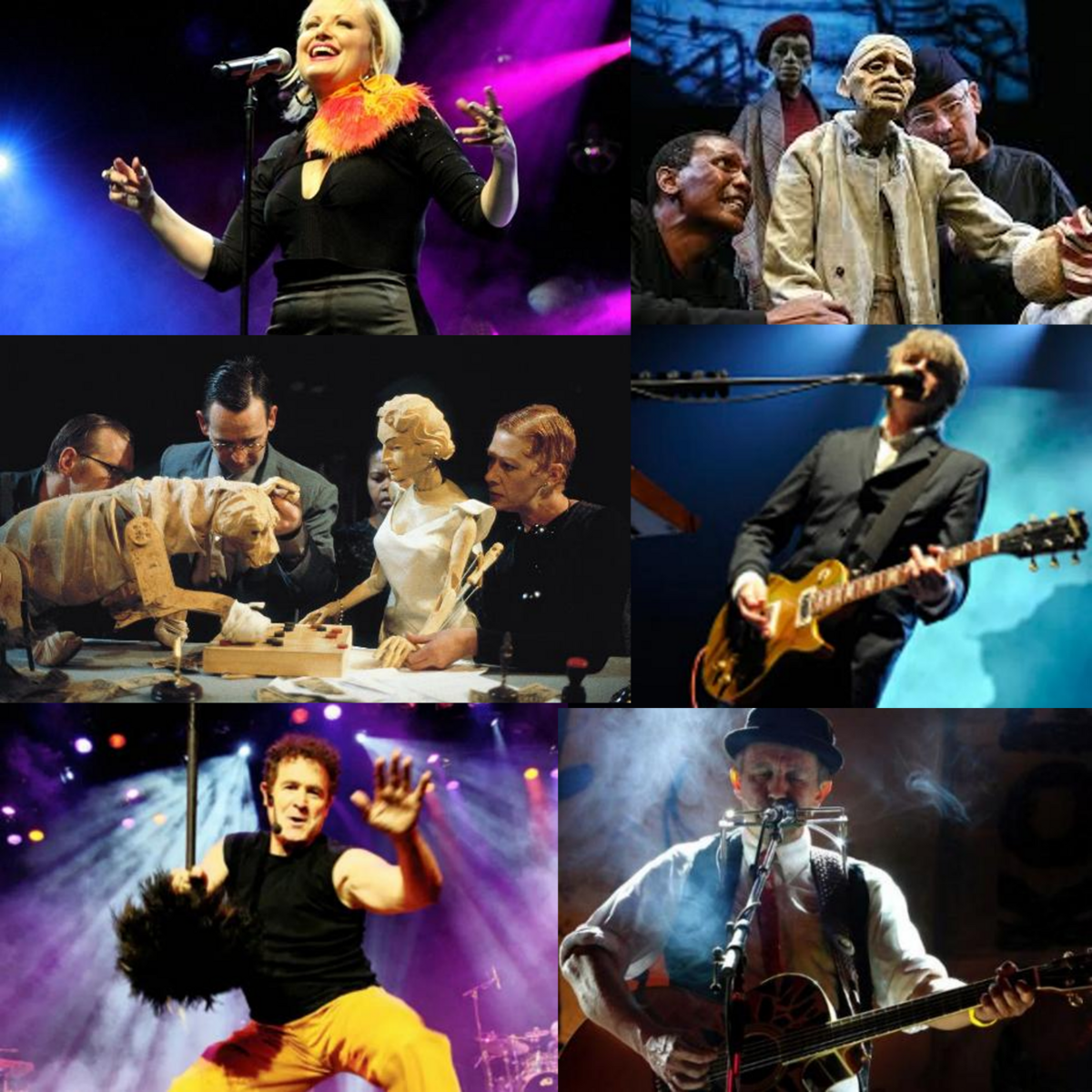
A decade as technical director at the National Arts Festival, touring with Handspring Puppet Company, Johnny Clegg and Mango Groove. An MBA at Wits, electives at Bocconi. The World Summit on Sustainable Development. The Wits Theatre. Capital campaigns at Wits University.
Underneath all of it, one question:
Why are people often miserable at work, when they've chosen to do what they do?
That question sent me through social science, behavioural economics, neuroscience and what I call "office philosophy" — and produced scale-ability in 2015, and the fractional COO practice that runs through it now.
A decade as technical director at the National Arts Festival, touring with Handspring Puppet Company, Johnny Clegg and Mango Groove. An MBA at Wits, electives at Bocconi. The World Summit on Sustainable Development. The Wits Theatre. Capital campaigns at Wits University.
Underneath all of it, one question:
Why are people often miserable at work, when they've chosen to do what they do?
That question sent me through social science, behavioural economics, neuroscience and what I call "office philosophy" — and produced scale-ability in 2015, and the fractional COO practice that runs through it now.
why I'm still here
My brain tends to order and straight lines — sudoku doesn't hold my attention long — so I work with businesses because they're the opposite: messy.
Employees who are wildly productive in one setting and recalcitrant in another.
Financials peppered with notes and exceptions.
Strategies that look perfect on a slide and dissolve the moment they meet real people on a real Tuesday.
That's the work I find interesting. Three decades of research and experimentation have given me tools to draw on — but there's no one-size-fits-all, and there's always a new scenario to test the limits.
I'm at my best with teams looking for better ways to delight their customers — and each other.
Employees who are wildly productive in one setting and recalcitrant in another.
Financials peppered with notes and exceptions.
Strategies that look perfect on a slide and dissolve the moment they meet real people on a real Tuesday.
That's the work I find interesting. Three decades of research and experimentation have given me tools to draw on — but there's no one-size-fits-all, and there's always a new scenario to test the limits.
I'm at my best with teams looking for better ways to delight their customers — and each other.
I believe
The workplace is the right forum for this.
Therapy gets an hour a week. Work gets most of your waking life, and its feedback loops are faster and more honest. Fix work and you fix a remarkable amount else.
Doing and thinking have to happen together.
I'm a builder — I like systems — but none of it sticks without the why, the purpose, the uncomfortable, reflective bit. You can talk until you're blue in the face, but on Monday morning everyone sits down at their desks and does what they've always done. Systems alone don't stick; reflection alone doesn't ship. Real change needs both.
People are designed to flourish.
Given the right structure, the right information, and enough room, almost everyone I've ever worked with wants to do good work. My job is to clear the runway.
Therapy gets an hour a week. Work gets most of your waking life, and its feedback loops are faster and more honest. Fix work and you fix a remarkable amount else.
Doing and thinking have to happen together.
I'm a builder — I like systems — but none of it sticks without the why, the purpose, the uncomfortable, reflective bit. You can talk until you're blue in the face, but on Monday morning everyone sits down at their desks and does what they've always done. Systems alone don't stick; reflection alone doesn't ship. Real change needs both.
People are designed to flourish.
Given the right structure, the right information, and enough room, almost everyone I've ever worked with wants to do good work. My job is to clear the runway.
we've been busy
A production company in Johannesburg on the brink of an HR meltdown. We rebuilt the unit into autonomous teams running off a central Kanban. Productivity up 36%, team from 9 to 19, hours back to human. MD: "An increase in productivity from day one."
Paragon — 48 people, interns to directors. A journey of personal experiments grounded in autonomy, purpose, mastery, and happiness.
Engagement up 26%, meaning up 40%, relationship quality up 33%, happiness up 40%.
The UN Organizational Development Section, during lock-down. We adapted a collaborative approach across several projects in the team. Team lead: "It took a few weeks to get used to. We see the dividends every day."
And a steady book of founders since 2015 who needed someone to help them get out of their own way.
Paragon — 48 people, interns to directors. A journey of personal experiments grounded in autonomy, purpose, mastery, and happiness.
Engagement up 26%, meaning up 40%, relationship quality up 33%, happiness up 40%.
The UN Organizational Development Section, during lock-down. We adapted a collaborative approach across several projects in the team. Team lead: "It took a few weeks to get used to. We see the dividends every day."
And a steady book of founders since 2015 who needed someone to help them get out of their own way.
reach out & chat
If you can see what's coming for your business but don't yet have the operational scaffolding to get there, let's have a conversation. The first call is free, honest, and fairly short.
